





Views: 514 Author: Site Editor Publish Time: 2026-09-10 Origin: Site


For many entrepreneurs looking to enter the car wash industry, the biggest bottleneck isn't necessarily capital—it's space.
In prime urban and commercial areas, finding suitable land for a car wash is becoming increasingly difficult. Traditional car wash setups require vast vehicle bypass lanes, large equipment rooms, and extensive drainage systems. For investors with a compact lot of only 100 to 200 square meters, conventional planning methods simply don't work.
However, limited space does not mean limited business potential.
The key lies in rethinking your layout: How should limited square footage be allocated? Which features are essential? How can compact and automated equipment maximize space efficiency?
For small-scale car wash projects, smart spatial planning is often far more critical than sheer site size.
Determine the Right Car Wash Model for Your Site First
A 100–200 square meter lot cannot simply replicate the layout of a full-scale car wash center.
Before finalizing any plans, business owners must evaluate several crucial layout factors, including vehicle entry and exit flow, wash bay and equipment positioning, customer waiting areas, as well as proper drainage and environmental compliance. In high-density commercial zones, improper planning on a small site easily leads to traffic bottlenecks, difficult vehicle turnarounds, and queue spills that block public roads.
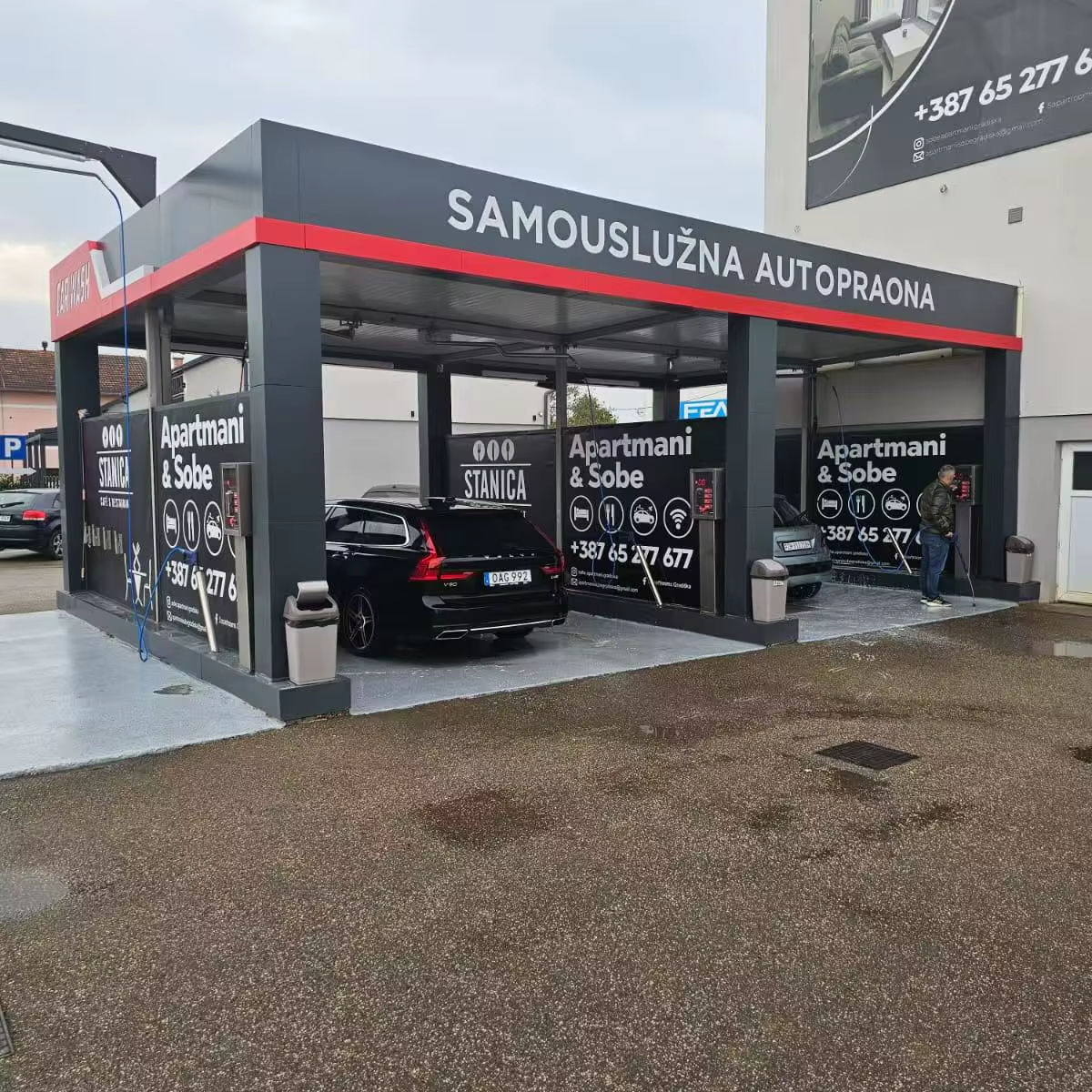
Therefore, small sites thrive best on streamlined, space-saving car wash models. Depending on your target market, options like self-service car wash bays, compact automatic wash systems, or fully unattended mini car wash stations offer the perfect fit.
Maximize the Value of Every Square Meter
While adding an extra storage area in a large car wash is trivial, every single square meter in a 100 sqm location directly impacts your Return on Investment (ROI).
Small car wash stations must eliminate non-essential, non-revenue-generating space by adopting compact equipment designs such as modular or upright control cabinets. Operators can also integrate customer payment interfaces directly into the main equipment housing while taking full advantage of vertical walls and structural pillars to mount auxiliary hardware.
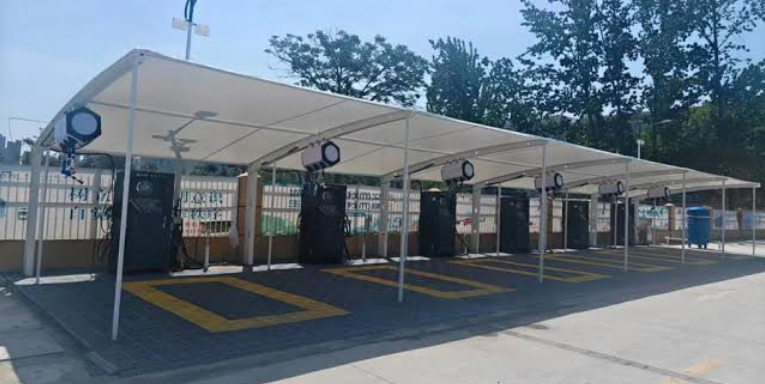
For example, wall-mounted self-service car wash equipment shifts pumps and control systems off the floor and onto walls, significantly freeing up ground space for easier vehicle positioning. This approach isn't about cramming in more hardware—it's about intelligent design that allows limited square footage to handle multiple functions seamlessly.
For leading equipment manufacturers like Sino Star, delivering high-efficiency small-footprint solutions is a cornerstone of modern car wash system design.
Never Sacrifice Vehicle Traffic Flow Just to Fit More Equipment
The most common trap in small site planning is over-packing the space with equipment. Installing too many machines in a confined space creates awkward vehicle angles, forces driver reverse maneuvers, and slows down overall throughput.
Smooth traffic flow keeps vehicles moving steadily without idle waiting, while eliminating tight turns and reverse driving minimizes accidents and customer anxiety. When driving into a bay is easy and stress-free, customers are far more likely to return for repeat visits.
As a general golden rule of operations, a site with fewer machines but smooth vehicle movement will consistently outperform a crowded site plagued by traffic jams.
Automation Keeps Labor Costs Under Control
Small car wash sites rarely have the physical space or margin to support a large on-site crew. This is precisely where automated equipment shines.
Automated wash machines and digital self-payment terminals eliminate the need for full-time attendants, allowing operators to shift their energy from repetitive manual washing to system maintenance, chemical management, and customer relations. At the same time, automated systems deliver consistent wash quality every single time.
As labor costs continue to rise globally, unattended and semi-unattended small car wash models offer an increasingly attractive margin profile for site owners.
Build a Diversified Service Mix on 100–200 Square Meters
A small car wash doesn't have to be a one-trick pony. Where space permits, operators can build high-margin add-on services around the core wash business, such as high-powered self-service vacuums, tire and wheel care modules, self-service pet wash stations, or dedicated motorcycle care bays.
The strategy isn't about adding endless options, but selecting services that match local neighborhood demands. For instance, a station near residential apartments might see high demand for vacuuming and pet washing, while an urban site might cater to commuters and motorbikes.
This service mix allows small stations to maximize revenue per customer instead of competing purely on wash price.
Start Small, Validate, then Scale Up
For first-time investors entering the car wash market, small-footprint sites offer a distinct strategic advantage: lower initial risk.
Starting with a compact site allows you to validate local market demand, monitor peak hours, test pricing strategies, and refine customer retention tactics without heavy capital expenditure.
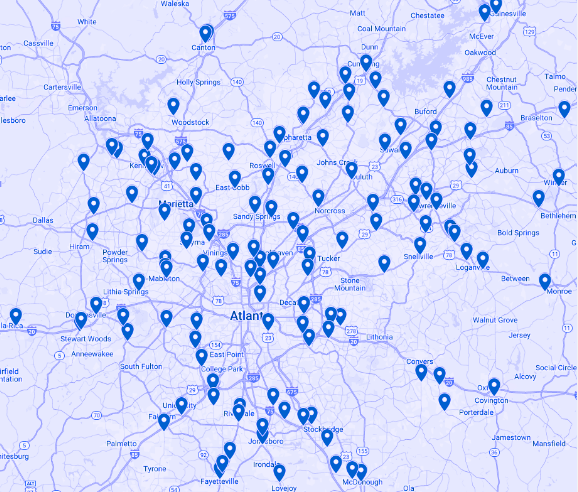
Once your operating model proves successful, you can easily replicate the exact same standardized equipment package and workflow across multiple suburban or urban locations. Standardization makes expansion effortless—turning a single small site into a profitable regional chain.
A 100–200 square meter lot is far from a limitation—it is a prime business opportunity.
By selecting the right wash technology, optimizing traffic flow, and building a high-margin service mix, small sites can deliver impressive returns. With automated, space-saving systems from industry leaders like Sino Star, small car washes can operate with minimal labor and maximum efficiency.
The future of car washing isn't just about bigger locations; it's about smarter, highly efficient, local service nodes.
To learn more about professional car wash equipment, compact station solutions, and global installation case studies, follow the official Sino Star Car Wash YouTube channel.